Hermitage of the Christ of Amparo
Travesía de Portugal, 2
https://api.inventrip.com/v100/image/86150?api_key=open-ideas-montanchez-%2A
Description
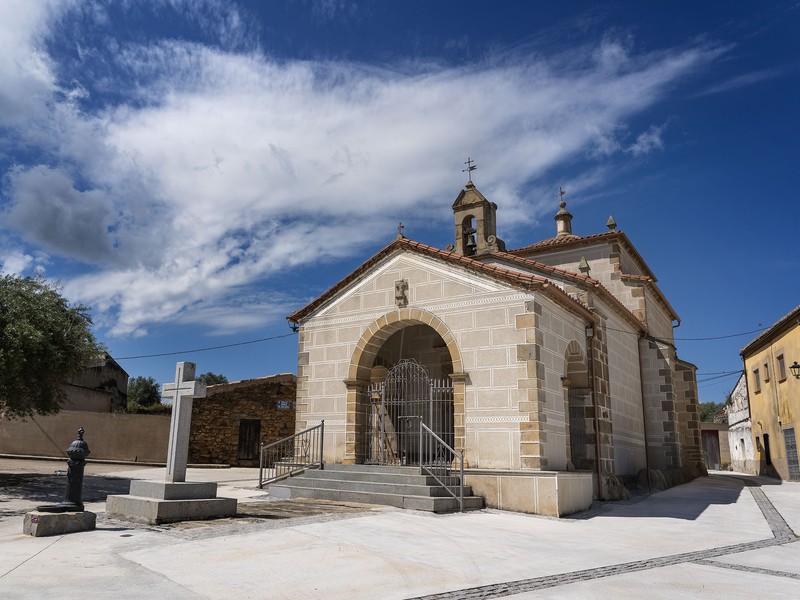
The original building of this hermitage was probably erected between the late 17th century and the early 18th century. Its exterior features traditional sgraffito from the area, a small entrance portico, and a Baroque belfry located above the only access door, which elegantly crowns the facade.
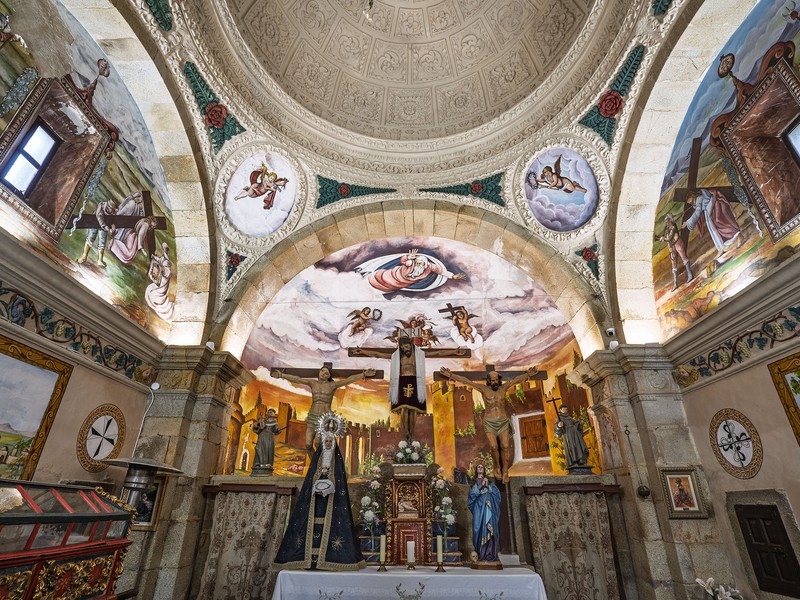
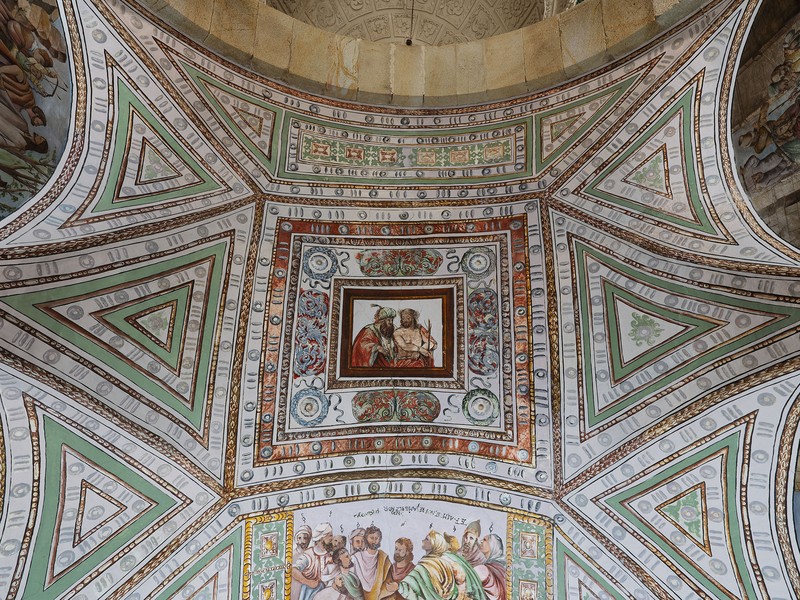
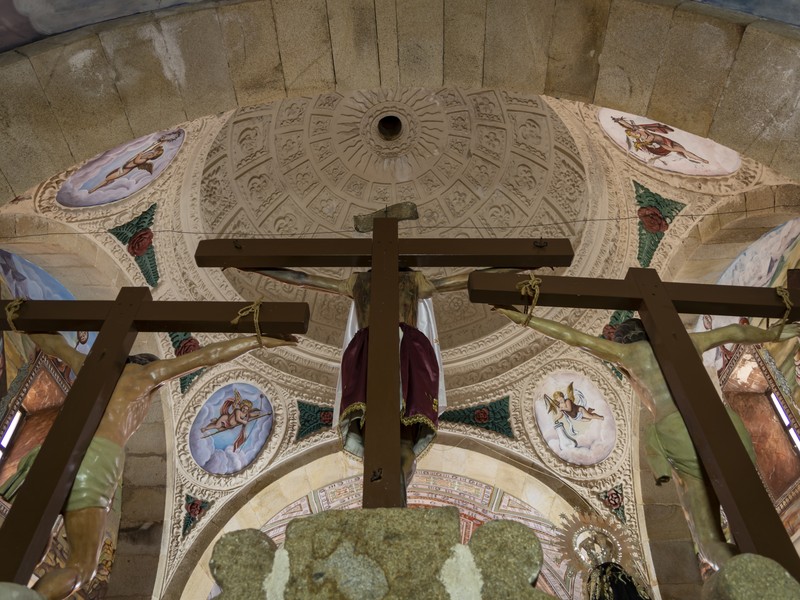
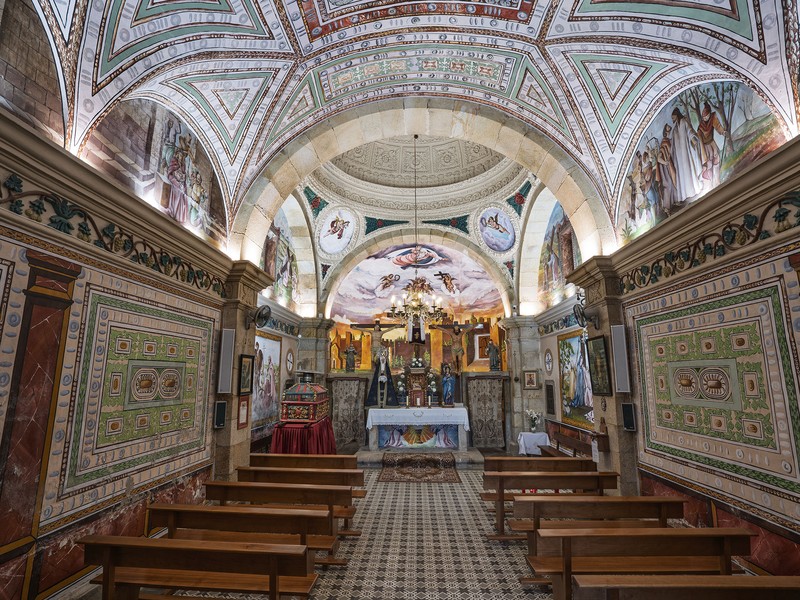
The interior consists of a single nave, divided into two sections covered with a barrel vault. At the end section, a half-orange dome rises, followed by a vaulted presbytery with pendentives, which is particularly unique as it includes a small ambulatory, something unusual in hermitages of reduced dimensions. The dome is decorated with Baroque plasterwork, enriching the architectural ensemble. Additionally, the paintings in this area take advantage of the building's shape to simulate mural canvases with their posterns, integrating architecture and painting in a very original way.
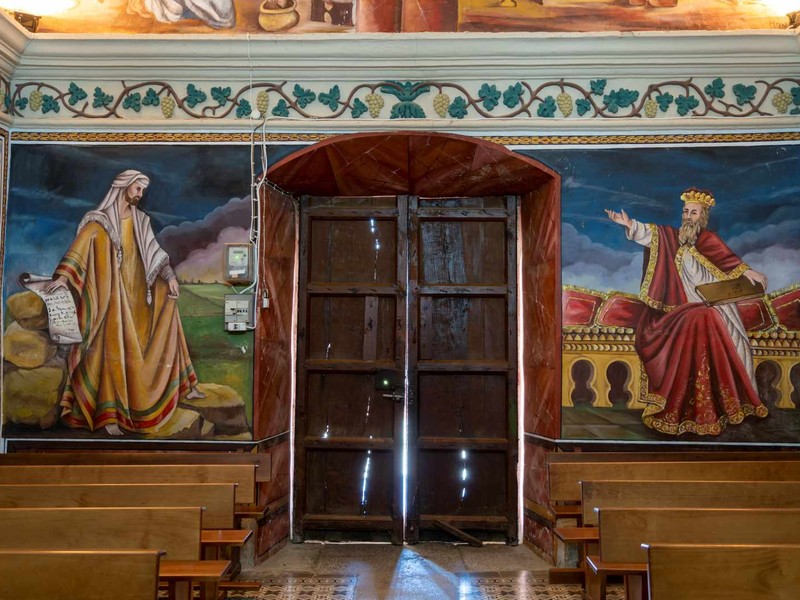
However, the most striking feature of the temple is its mural paintings. With vivid colors and careful execution, they completely cover the walls and depict various scenes from the life of Christ, such as Jesus washing the disciples' feet, the Last Supper, the Ecce Homo, the Flagellation, the Fall, the Prayer in the Garden, the Kiss of Judas, and the Resurrected Jesus. In the presbytery, the figure of a majestic Creator God stands out, presiding over the ensemble.
Also of special interest is the polychrome wooden tomb, from which the image of Christ of Amparo is removed every Good Friday to perform the traditional Stations of the Cross to the Parish Church of San Pedro, keeping alive an important religious and cultural tradition.
Image gallery